Price of dining table buying guide in UK
A dining table buying guide can make choosing the right table much easier, especially when you are comparing different sizes, shapes, materials, and designs. The right dining table should fit your space comfortably, accommodate your household, complement your interior style, and remain practical for everyday use.
This dining table buying guide covers everything you need to consider before buying a dining table in the UK, from measuring your dining area and choosing the right shape to selecting materials, seating capacity, and design. Whether you are furnishing a new home or replacing an existing table, these practical tips can help you choose a dining table that works for your space and lifestyle.
How to Choose a Dining Table
When learning how to choose a dining table, start with the way you use your dining area rather than focusing only on appearance. A beautiful table may not be practical if it is too large for your room or does not provide enough seating.
Think about your usual dining habits. Do you mainly have family meals, entertain guests regularly, work from the table, or use the space for multiple purposes?
The answers will help you decide which shape, size, material, and design will work best for your home.
Price of dining table buying guide in UK
The price of dining tables in the UK typically starts from around £150–£300 for basic models. Affordable tables made from engineered wood or simple materials can suit smaller dining rooms and everyday family use.
Mid-range dining tables generally cost around £300–£700, while premium solid-wood or designer tables can reach £800–£1,500+. The final price depends on size, material, shape, finish, construction quality and whether the table is extendable.
Consider Your Dining Space
Before looking at specific dining tables, measure the available area carefully. Remember that the table itself is only part of the space you need to plan.
Chairs need enough room to move in and out comfortably, while people should be able to walk around the table without feeling restricted.
A practical approach is to measure the entire dining area and leave sufficient clearance around the table. This creates a more comfortable layout and helps prevent the room from feeling overcrowded.
If you are furnishing a smaller UK home or dining room, consider the overall footprint of the table as well as its appearance. A compact or round design can sometimes make better use of the available space.
Think About Your Lifestyle
A dining table should match your daily routine. A family with young children may prefer a durable and easy-to-clean surface, while someone who entertains frequently may prioritise a larger design.
If you often host dinner parties, consider an extendable dining table. It can provide additional seating when required without taking up unnecessary space every day.
For smaller homes, a compact dining table can make the room feel more open while still providing enough space for everyday meals.
How to Choose the Right Size Dining Table
Understanding how to choose the right size dining table is one of the most important parts of the buying process. The table should provide enough room for everyone without overwhelming the dining area.
Start by considering the number of people who will normally use the table. Then think about how often you need additional seating for guests.
A useful dining table size guide should consider more than the number of seats. Chair width, table legs, tabletop dimensions, and available floor space can all affect how comfortably people can sit.
Dining Table Size Guide
Use the following points as a starting point when comparing dining table sizes:
-
2–4 people: A smaller rectangular, square, or round dining table can work well in compact dining areas.
-
4–6 people: A medium-sized table provides comfortable seating for everyday family meals.
-
6–8 people: A larger rectangular table can accommodate a family while providing additional space for guests.
-
8+ people: Consider a large table or an extendable design if you regularly entertain.
These recommendations are starting points rather than strict rules. The ideal dining table dimensions will depend on the table design, leg configuration, chair width, and amount of personal dining space required.
Dining Table Dimensions and Room Clearance
One of the most common mistakes when buying a dining table is measuring only the tabletop dimensions. You should also consider the chairs and walking space around the table.
Before choosing a table, measure the area available for both the table and chairs. Consider where people will sit, how chairs will be pulled out, and how easily people can move around the room.
You can also place masking tape on the floor to mark the approximate dimensions of your preferred table. This simple technique allows you to visualise how much floor space it will occupy before making a purchase.
How to Choose the Right Dining Table for Your Home
Knowing how to choose the right dining table for your home requires balancing functionality with aesthetics. Your table should complement your existing furniture instead of competing with it.
Look at the colours, finishes, textures, and shapes already present in the room. A contemporary interior may work well with a clean-lined table, while a more traditional space may benefit from a warmer and more detailed design.
Match the Table to Your Interior Style
Consider the overall character of your home before selecting a design.
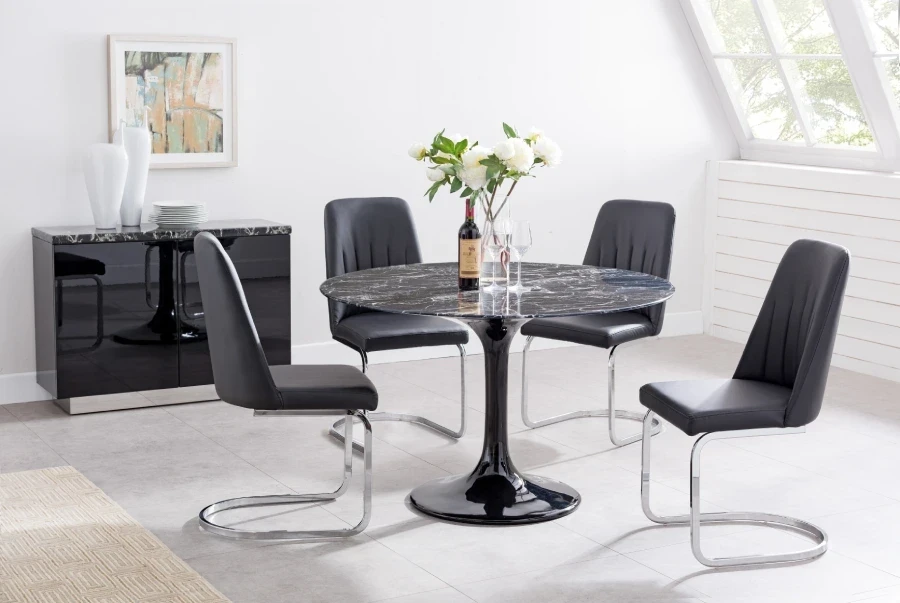
A minimalist dining area can benefit from simple silhouettes and understated finishes. A luxury interior may suit a sophisticated marble or stone-inspired surface, while natural wood can introduce warmth and texture.
The goal is not necessarily to match every piece of furniture perfectly. Instead, choose a dining table that creates visual balance with the surrounding décor.
Choosing the Right Dining Table Shape
The shape of a dining table affects both its appearance and functionality. It can also influence how many people can comfortably sit around it and how efficiently the available space is used.
Round Dining Table
A round dining table can be particularly useful in smaller dining areas because its curved shape can make movement around the room easier.
Round dining tables also create an intimate dining environment because everyone sits closer together and has a more direct view of the other guests.
They can work especially well in square rooms, apartments, breakfast areas, and open-plan interiors where you want to create a defined dining zone.
Rectangular Dining Tables
Rectangular dining tables remain one of the most versatile options for family dining rooms. Their elongated shape works particularly well in larger or narrow rooms.
They can also provide more seating capacity, making them a practical choice for households that frequently entertain.
Square Dining Tables
Square dining tables can work well in rooms where the dining area has a balanced layout. They create a symmetrical appearance and can be particularly effective for smaller groups.
However, larger square tables may require significant floor space, so accurate measurements are especially important.
Oval Dining Tables
Oval dining tables combine some of the benefits of rectangular and round designs. They provide a generous tabletop while avoiding sharp corners.
This can create a softer visual appearance, particularly in contemporary dining spaces.
Which Dining Table Material Should You Choose?
Material affects durability, maintenance, appearance, and price. Therefore, it should be considered alongside size and shape rather than as an afterthought.
Wood
Wood remains a popular choice because it brings warmth and natural character to a dining room. Depending on the finish, wooden dining tables can complement traditional, contemporary, rustic, or minimalist interiors.
A quality wooden table can also become a long-term investment when properly maintained.
Marble and Stone Finishes
Marble and stone-inspired finishes can create a sophisticated focal point. They are particularly suitable for interiors where the dining table is intended to make a strong visual statement.
Before choosing this type of surface, consider weight, maintenance requirements, and the amount of daily use.
Glass
Glass can make a dining area appear lighter and more open. It can be particularly effective in smaller rooms because the transparent surface creates less visual weight.
However, glass requires regular cleaning and may not be the first choice for every family.
Dining Table Buying Guide: What to Check Before You Buy
Before placing an order, use this quick checklist to compare your options.
-
Dimensions: Confirm the length, width, and height of the dining table.
-
Seating: Check the recommended seating capacity.
-
Room clearance: Make sure there is enough space for chairs and movement.
-
Material: Choose a surface that matches your lifestyle and maintenance preferences.
-
Style: Consider whether the design complements your existing furniture.
-
Construction: Look at the quality of the frame, legs, joints, and tabletop.
-
Maintenance: Understand how the surface should be cleaned and protected.
-
Delivery: Check access routes, packaging, delivery conditions, and installation requirements.
Taking a few minutes to check these details can prevent costly mistakes and help you select a dining table that works in your home for years.
How to Choose a Dining Table for Entertaining
If you frequently invite family and friends, seating flexibility should be a priority. An extendable dining table can be particularly useful because it allows you to increase capacity when needed.
Consider where additional chairs will be stored when they are not being used. You should also make sure the extended table still leaves enough space for people to move around the room.
For regular entertaining, prioritise comfort rather than simply choosing the largest possible tabletop.
Choosing a Table That Complements Your Dining Chairs
The relationship between the table and chairs is often overlooked. However, the two pieces should work together in terms of proportion, height, colour, and overall style.
Dining chairs should fit comfortably beneath the tabletop, while the table height should allow enough legroom for different users.
If you are purchasing both pieces at the same time, compare their dimensions before ordering. This can help create a cohesive dining area and improve everyday comfort.
Where to Buy Quality Dining Tables in the UK
Once you understand how to choose a dining table, the next step is finding a collection that offers a range of designs, sizes, and finishes.
Alfrank offers a curated selection of furniture for contemporary homes, including dining tables alongside dining chairs, coffee tables, console tables, side tables, and sideboards.
Its dining collection includes different styles and price points, giving shoppers the opportunity to compare designs according to their space and preferences.
Explore the Alfrank Dining Tables collection to compare available designs and find a dining table that suits your dining space.
Final Tips Before Buying Your Dining Table
A good dining table guide should help you think beyond appearance. The best table is one that fits your room, supports your lifestyle, accommodates your household, and complements your interior.
Before making your final decision, measure the room, determine your ideal dining table seating capacity, choose a suitable shape, compare materials, and consider how much maintenance you are comfortable with.
Remember that the perfect dining table does not simply fill an empty space. It becomes part of everyday life, from quick family breakfasts to weekend dinners and celebrations with friends.
If you are still comparing options, start with your room measurements and seating requirements, then narrow your choices based on material and design. This approach makes the buying process simpler and helps you invest in a table that looks beautiful while remaining practical.
For a carefully selected range of dining tables designed for modern interiors, visit Alfrank and explore the available collection.